Evan PREECE [18521]
- Born: 12 Jun 1803, Hereford, Herefordshire, England
- Baptised: 19 Jun 1803, Dilwyn, Herefordshire, England
- Marriage (1): Margaret CALAGHAN [18522] on 26 Jun 1837 in Parish Church of Sorell, St Georges, Tasmania
- Died: 6 Jul 1860, Mt Gambier, South Australia at age 57

 Other Records Other Records
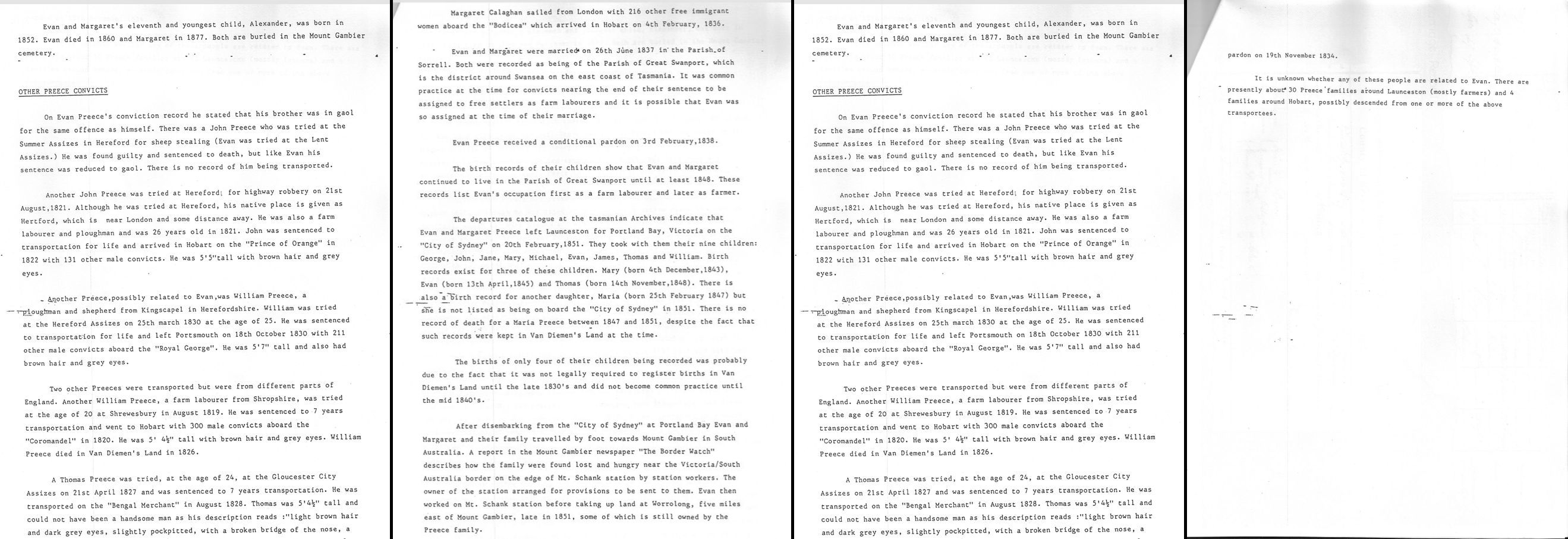
• Evan Preece: Convict: A Precis of his life in Australia.
EVAN AND MARGARET PREECE
The earliest written record of Evan Preece comes from the Oxford Lent Assizes in 1824 and it is here that the story of the Preece family in Australia begins. This record shows that Evan Preece was 19 years old when accused of stealing a sheep worth £2 from a Mr. George YeId on the 10th March,1824 at Pembridge, Herefordshire. From this it is obvious that he was born in 1804 or early 1805.
Evan was tried in the Oxford Lent Assizes on the 22nd March,1824. He pleaded not guilty to the charge but was found guilty by the jury and sentenced to death by hanging. However, this sentence was later commuted to 14 years transportation.
He was transported on the "Princess Charlotte" which departed England on 9th September, 1824. The ship was under the command of a Captain Blythe and had 140 male convicts on board. It arrived in Hobart on 9th November,1824.
Convict records in the Tasmanian State Archives describe Evan Preece as being 5'9" tall with brown hair, grey eyes and a small mole on the right inner lip. His native place was given as Dilling/Leominister in Herefordshire and his occuplrion as a farm labourer and ploughman. He is described in his gaol report "disorderly and of indifferent character."
On 2nd. June, 1829 Evan was reported for insolence and disobedience to an Officer Adey and others and was sent for six months to Maria Island, off the east coast of Tasmania. The report was made by Captain G. Meredith who later played a part in the opening up of farmland in the southeast of Tasmania. He was again reported by Meredith on 2nd March 1830 for insolence and violence towards an overseer's wife. For this he received twenty five lashes.
Convicts wishing to marry had to apply for approval to do so. On the 9th of May 1937, Evan applied for permission to marry Mary Calaghan and approval was granted on the 27th May. All previous and subsequent records show that her name was Margaret. The spelling of her maiden name is also uncertain; as in various records it is spelt as "Callaghan", "Callahan" and "Calahin". This is not surprising in view of the fact that neither she nor Evan could write.
Margaret Calaghan sailed from London with 216 other free immigrant women aboard the "Bodicea" which arrived in Hobart on 4th February, 1836.
Evan and Margaret married on 26th June 1837 in the Parish.of Sorrell. Both were recorded as being of the Parish of Great Swanport, which is the district around Swansea on the east coast of Tasmania. It was common practice at the time for convicts nearing the end of their sentence to be assigned to free settlers as farm labourers and it is possible that Evan was so assigned at the time of their marriage.
Evan Preece received a conditional pardon on 3rd February,1838.
The birth records of their children show that Evan and Margaret continued to live in the Parish of Great Swanport until at least 1848. These records list Evan's occupation first as a farm labourer and later as farmer.
The departures catalogue at the Tasmanian Archives indicate that Evan and Margaret Preece left Launceston for Portland Bay, Victoria on the "City of Sydney" on 20th February,1851. They took with them their nine children: George, John, Jane, Mary, Michael, Evan, James, Thomas and William. Birth records exist for three of these children. Mary (born 4. December,1843), Evan (born 13th Apri1,1845) and Thomas (born 14th November,1848). There is also a birth record for another daughter, Maria (born 25th February 1847) but she is not listed as being on board the "City of Sydney" in 1851. There is no record of death for a Maria Preece between 1847 and 1851, despite the fact that such records were kept in Van Diemen's Land at the time.
The births of only four of their children being recorded was probably due to the fact that it was not legally required to register births in Van Diemen's Land until the late 1830's and did not become common practice until the mid 1840's.
After disembarking from the "City of Sydney" at Portland Bay Evan and Margaret and their family travelled by foot towards Mount Gambier in South Australia. A report in the Mount Gambier newspaper "The Border Watch" describes how the family were found lost and hungry near the Victoria/South Australia border on the edge of Mt. Schenk station by station workers. The owner of the station arranged for provisions to be sent to them. Evan then worked on Mt. Schenk station before taking up land at Worrolong, five miles east of Mount Gambier, late in 1851, some of which is still owned by the Preece family.
Evan and Margaret's eleventh and youngest child, Alexander was born in 1852. Evan died in 1860 and Margaret in 1877. Both are buried in the Mount Gambier cemetery.
OTHER PREECE CONVICTS
On Evan Preece's conviction record he stated that his brother was in gaol for the same offence as himself. There was a John Preece who was tried at the Summer Assizes in Hereford for sheep stealing (Evan was tried at the Lent Assizes.) He was found guilty and sentenced to death, but like Evan his sentence was reduced to gaol. There is no record of him being transported.
Another John Preece was tried at Hereford; for highway robbery on 21st August,1821. Although he was tried at Hereford, his native place is given as Hertford, which is near London and some distance away. He was also a farm labourer and ploughman and was 26 years old in 1821. John was sentenced to transportation for life and arrived in Hobart on the "Prince of Orange" in 1822 with 131 other male convicts. He was 5.5" tall with brown hair and grey eyes.
Another Preece, possibly related to Evan, was William Preece, a ploughman and shepherd from Kingscapel in Herefordshire. William was tried at the Hereford Assizes on 25th march 1830 at the age of 25. He was sentenced to transportation for life and left Portsmouth on 18th October 1830 with 211 ocher male convicts aboard the "Royal George". He was 5'7" tall and also had brown hair and grey eyes.
Two other Preeces were transported but were from different parts of England. Another William Preece, a farm labourer from Shropshire, was tried at the age of 20 at Shrewesbury in August 1819. He was sentenced to 7 years transportation and went to Hobart with 300 male convicts aboard the "Coromandel" in 1820. He was 5' 41/2" tall with brown hair and grey eyes. William Preece died in Van Diemen's Land in 1826.
A Thomas Preece was tried, at the age of 24, at the Gloucester City Assizes on 21st April 1827 and was sentenced to 7 years transportation. He was transported on the "Bengal Merchant" in August 1828. Thomas was 5'4 1/2" tall and could not have been a handsome man as his description reads : ''light brown hair and dark grey eyes. slightly pockpitted, with a broken bridge of the nose, a pardon on 19th November 1834.
It is unknown whether any of these people are related to Evan. There are presently about 30 Preece families around Launceston (mostly farmers) and 4 families around Hobart, possibly descended from one or more of the above transportees.
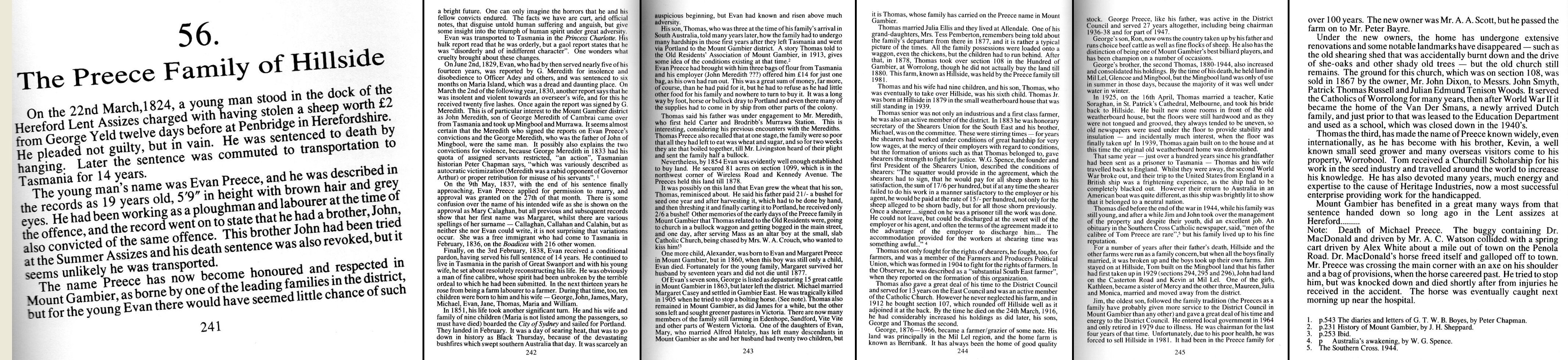
• Evan Preece: Second to None, 1988 written by Pam & Bruce O'Connor, Published by District Council of Mt Gambier South Australia.
"Second to None" A story of the Rural Pioneers of Mt. Gambier; by Pam & Bruce O'Oconnor ,Published by the District Council of Mt. Gambier, 1 Jan 1988.
SECOND TO NONE, Chapter 56.
The Preece Family of Hillside:
On the 22nd March,1824, a young man stood in the dock of the Hereford Lent Assizes charged with having stolen a sheep worth £2 from George Yeld twelve days before at Penbridge in Herefordshire. He pleaded not guilty, but in vain. He was sentenced to death by hanging. Later the sentence was commuted to transportation to Tasmania for 14 years. The young man's name was Evan Preece, and he was described in the records as 19 years old, 5'9" in height with brown hair and grey eyes. He had been working as a ploughman and labourer at the time of the offence, and the record went on to state that he had a brother, John, also convicted of the same offence. This brother John had been tried at the Summer Assizes and his death sentence was also revoked, but it seems unlikely he was transported. The name Preece has now become honoured and respected in Mount Gambier, as borne by one of the leading families in the district, but for the young Evan there would have seemed little chance of such
p.241
a bright future. One can only imagine the horrors that he and his fellow convicts endured. The facts we have are curt, and official notes, that disguise untold human suffering and anguish, but give some insight into the triumph of human spirit under great adversity. Evan was transported to Tasmania in the Princess Charlotte. His hulk report read that he was orderly, but a gaol report states that he was "disorderly and of indifferent character". One wonders what cruelty brought about these changes. On June 2nd, 1829, Evan, who had by then served nearly five of his fourteen years, was reported by G. Meredith for insolence and disobedience to Officer Adey and others, and was sentenced to six months on Maria Island, which was a dread and daunting place. On March the 2nd of the following year, 1830, another report says that he was insolent and violent towards an overseer's wife, and for this he received twenty five lashes. Once again the report was signed by G. Meredith. This is of particular interest to the Mount Gambier district as John Meredith, son of George Meredith of Cambrai came over from Tasmania and took up Mingbool and Murrawa. It seems almost certain that the Meredith who signed the reports on Evan Preece's convictions and the George Meredith, who was the father of John of Mingbool, were the same man. It possibly also explains the two convictions for violence, because George Meredith in 1833 had his quota of assigned servants restricted, "an action", Tasmanian historian Peter Chapman says, "which was variously described as autocratic victimization (Meredith was a rabid opponent of Governor Arthur) or proper retribution for misuse of his servants". 1 On the 9th May, 1837, with the end of his sentence finally approaching, Evan Preece applied for permission to marry, and approval was granted on the 27th of that month. There is some confusion over the name of his intended wife as she is shown on the approval as Mary Calaghan, but all previous and subsequent records show that her first name was Margaret, whilst there are various spellings of her surname '97 Callaghan, Callahan and Calahin, but as neither she nor Evan could write, it is not surprising that variations occur. She was a free immigrant who had come to Tasmania in February, 1836, on the Boadicea with 216 other women. Finally, on the 3rd February, 1838, Evan received a conditional pardon, having served his full sentence of 14 years. He continued to live in Tasmania in the parish of Great Swanport and with his young wife, he set about resolutely reconstructing his life. He was obviously a man of fine calibre, whose spirit had been unbroken by the terrible ordeal to which he had been submitted. In the next thirteen years he rose from being a farm labourer to a farmer. During that time, too, ten children were born to him and his wife '97 George, John, James, Mary, Michael, Evan, Jane, Thomas, Maria and William. In 1851, his life took another significant turn. He and his wife and family of nine children (Maria is not listed among the passengers, so must have died) boarded the City of Sydney and sailed for Portland. They landed in February. It was a day of searing heat, that was to go down in history as Black Thursday, because of the devastating bushfires which swept southern Australia that day. It was scarcely an
p.242
auspicious beginning, but Evan had known and risen above much adversity. His son, Thomas, who was three at the time of his family's arrival in South Australia, told many years later, how the family had to undergo lila ny hardships in those first years after they left Tasmania and went via Portland to the Mount Gambier district. A story Thomas told to the Old Residents' Association of Mount Gambier, in 1913, gives some idea of the conditions existing at that time.2 I van Preece had brought with him three bags of flour from Tasmania and his employer (John Meredith ???) offered him £14 for just one hag, as his own had run out. This was a great sum of money, far more, of course, than he had paid for it, but he had to refuse as he had little other food for his family and nowhere to turn to buy it. It was a long way by foot, horse or bullock dray to Portland and even there many of the supplies had to come in by ship from other parts of the colony. Thomas said his father was under engagement to Mr. Meredith, who first held Carter and Brodribb's Murrawa Station. This is interesting, considering his previous encounters with the Merediths. Thomas Preece also recalled that at one stage, the family were so poor that all they had left to eat was wheat and sugar, and so for two weeks they ate that boiled together, till Mr. Livingston heard of their plight and sent the family half a bullock. Nevertheless, by 1854 Evan was evidently well enough established to buy land. He secured 81 acres on section 1099, which is in the northwest corner of Wireless Road and Kennedy Avenue. The Preeces held this land till 1878. It was possibly on this land that Evan grew the wheat that his son, Thomas, reminisced about. He said his father paid 21/ - a bushel for seed one year and after harvesting it, which had to be done by hand, and then threshing it and finally carting it to Portland, he received only 2/6 a bushel! Other memories of the early days of the Preece family in Mount Gambier that Thomas related to the Old Residents were, going to church in a bullock waggon and getting bogged in the main street, and one day, after serving Mass as an altar boy at the small, slab Catholic Church, being chased by Mrs. W. A. Crouch, who wanted to kiss him!3 One more child, Alexander, was born to Evan and Margaret Preece in Mount Gambier, but in 1860, when this boy was still only a child, Evan died. Fortunately for the young family, Margaret survived her husband by seventeen years and did not die until 1877. Of Evan's seven sons, George is listed as depasturing 15 great cattle in Mount Gambier in 1863, but later left the district. Michael married Margaret Casey and settled in Gambier East. He was tragically killed in 1905 when he tried to stop a bolting horse. (See note). Thomas also remained in Mount Gambier, as did James for a while, but the other sons left and sought greener pastures in Victoria. There are now many members of the family still farming in Edenhope, Sandford, Vite Vite and other parts of Western Victona. One of the daughters of Evan, Mary, who married Alfred Hateley, has left many descendants in Mount Gambier as she and her husband had twenty two children, but
p.243
it is Thomas, whose family has carried on the Preece name in Mount Gambier. Thomas married Julia Ellis and they lived at Allendale. One of his grand-daughters, Mrs. Tess Pemberton, remembers being told about the family's departure from there in 1877, and it is rather a typical picture of the times. All the family possessions were loaded onto a waggon, even the chickens, but the children had to run behind. After that, in 1878, Thomas took over section 108 in the Hundred of Gambier, at Worrolong, though he did not actually buy the land till 1880. This farm, known as Hillside, was held by the Preece family till 1981. Thomas and his wife had nine children, and his son, Thomas, who was eventually to take over Hillside, was his sixth child. Thomas Jr. was born at Hillside in 1879 in the small weatherboard house that was still standing in 1939. Thomas senior was not only an industrious and a first class farmer, he was also an active member of the district. In 1883 he was honorary secretary of the Shearers Union for the South East and his brother, Michael, was on the committee. These were stirring times '97 for years the shearers had worked under conditions of great hardship for very low wages, at the mercy of their employers with regard to conditions, but the formation of unions such as that Thomas belonged to, gave shearers the strength to fight for justice. W.G. Spence, the founder and first President of the Shearers Union, described the conditions of shearers: "The squatter would provide in the agreement, which the shearers had to sign, that he would pay for all sheep shorn to his satisfaction, the sum of 17/6 per hundred, but if at any time the shearer failed to do his work in a manner satisfactory to the employer or his agent, he would be paid at the rate of 15/- per hundred, not only for the sheep alleged to be shorn badly, but for all those shorn previously. Once a shearer signed on he was a prisoner till the work was done. He could not leave, but could be discharged at the sweet will of the employer or his agent, and often the terms of the agreement made it to the advantage of the employer to discharge him.... The accommodation provided for the workers at shearing time was something awful..." 4 Thomas not only fought for the rights of shearers, he fought, too, for farmers, and was a member of the Farmers and Producers Political Union, which was formed in 1904 to fight for the rights of farmers. In the Observer, he was described as a "substantial South-East farmer", when they reported on the formation of this organization. Thomas also gave a great deal of his time to the District Council and served for 13 years on the East Council and was an active member of the Catholic Church. However he never neglected his farm, and in 1912 he bought section 107, which rounded off Hillside well as it adjoined it at the back. By the time he died on the 24th March, 1916, he had considerably increased his holdings as did later, his sons, George and Thomas the second. George, 1876-1966, became a farmer/grazier of some note. His land was principally in the Mil Lel region, and the home farm is known as Berribank. It has always been the home of good quality
P.244
stock. George Preece, like his father, was active in the District Council and served 27 years altogether, including being chairman 1936-38 and for part of 1947. George's son, Ron, now owns the country taken up by his father and runs choice beef cattle as well as fine flocks of sheep. He also has the distinction of being one of Mount Gambier's best billiard players, and has been champion on a number of occasions. George's brother, the second Thomas, 1880-1944, also increased and consolidated his holdings. By the time of his death, he held land in M i I Lel, Glencoe and Mingbool, but the Mingbool land was only of use in summer in those days, because the majority of it was well under water in winter. In 1925, on the 16th April, Thomas married a teacher, Katie Soraghan, in St. Patrick's Cathedral, Melbourne, and took his bride hack to Hillside. He built new stone rooms in front of the old weatherboard house, but the floors were still hardwood and as they were not tongued and grooved, they always tended to be uneven, so old newspapers were used under the floor to provide stability and insulation '97 and incidentally much interest, when the floor was finally taken up! In 1939, Thomas again built on to the house and at this time the original old weatherboard home was demolished. That same year '97 just over a hundred years since his grandfather had been sent as a prisoner to Tasmania '97 Thomas and his wife travelled back to England. Whilst they were away, the second World War broke out, and their trip to the United States- from England in a British ship was a frightening experience, as the ship had to be completely blacked out. However their return to Australia in an American boat was quite different, as this ship was brightly lit to show that it belonged to a neutral nation. Thomas died before the end of the war in 1944, while his family was still young, and after a while Jim and John took over the management of the property and despite their youth, did an excellent job. An obituary in the Southern Cross Catholic newspaper, said, "men of the calibre of Tom Preece are rare",5 but his family lived up to his fine reputation. For a number of years after their father's death, Hillside and the other farms were run as a family concern, but when all the boys finally married, it was broken up and the boys took up their own farms. Jim stayed on at Hillside, Tom built on the Mingbool land that his father had first taken up in 1929 (sections 294, 295 and 296), John had land on the Casterton Road and Kevin at Mil Lel. One of the girls, Kathleen, became a sister of Mercy and the other three, Maureen, Julia and Monica, married and moved away from the district. Jim, the oldest son, followed the family tradition (the Preeces as a family have probably given more service to the District Council in Mount Gambier than any other) and gave a great deal of his time and energy to the District Council. He entered local government in 1964 and only retired in 1979 due to illness. He was chairman for the last four years of that time. Unfortunately, due to his poor health, he was forced to sell Hillside in 1981. It had been in the Preece family for
p.245
over 100 years. The new owner was Mr. A. A. Scott, but he passed the farm on to Mr. Peter Bayre. Under the new owners, the home has undergone extensive renovations and some notable landmarks have disappeared '97 such as the old shearing shed that was accidentally burnt down and the drive of she-oaks and other shady old trees '97 but the old church still remains. The ground for this church, which was on section 108, was sold in 1867 by the owner, Mr. John Dixon, to Messrs. John Smyth, Patrick Thomas Russell and Julian Edmund Tenison Woods. It served the Catholics of Worrolong for many years, then after World War II it became the home of the Van Der Smans, a newly arrived Dutch family, and just prior to that was leased to the Education Department and used as a school, which was closed down in the 1940's. Thomas the third, has made the name of Preece known widely, even internationally, as he has become with his brother, Kevin, a well known small seed grower and many overseas visitors come to his property, Worrobool. Tom received a Churchill Scholarship for his work in the seed industry and travelled around the world to increase his knowledge. He has also devoted many years, much energy and expertise to the cause of Heritage Industries, now a most successful enterprise providing work for the handicapped. Mount Gambier has benefited in a great many ways from that sentence handed down so long ago in the Lent assizes at Hereford Note: Death of Michael Preece. The buggy containing Dr. MacDonald and driven by Mr. A. C. Watson collided with a spring cart driven by Alex White about a mile out of town on the Penola Road. Dr. MacDonald's horse freed itself and galloped off to town. Mr. Preece was crossing the main corner with an axe on his shoulder and a bag of provisions, when the horse careered past. He tried to stop him, but was knocked down and died shortly after from injuries he received in the accident. The horse was eventually caught next morning up near the hospital.
1. p.543 The diaries and letters of G. T. W. B. Boyes, by Peter Chapman. 2. p.231 History of Mount Gambier, by J. H. Sheppard. 3. p.253 Ibid. 4. p Australia's awakening, by W. G. Spence. 5. The Southern Cross. 1944.
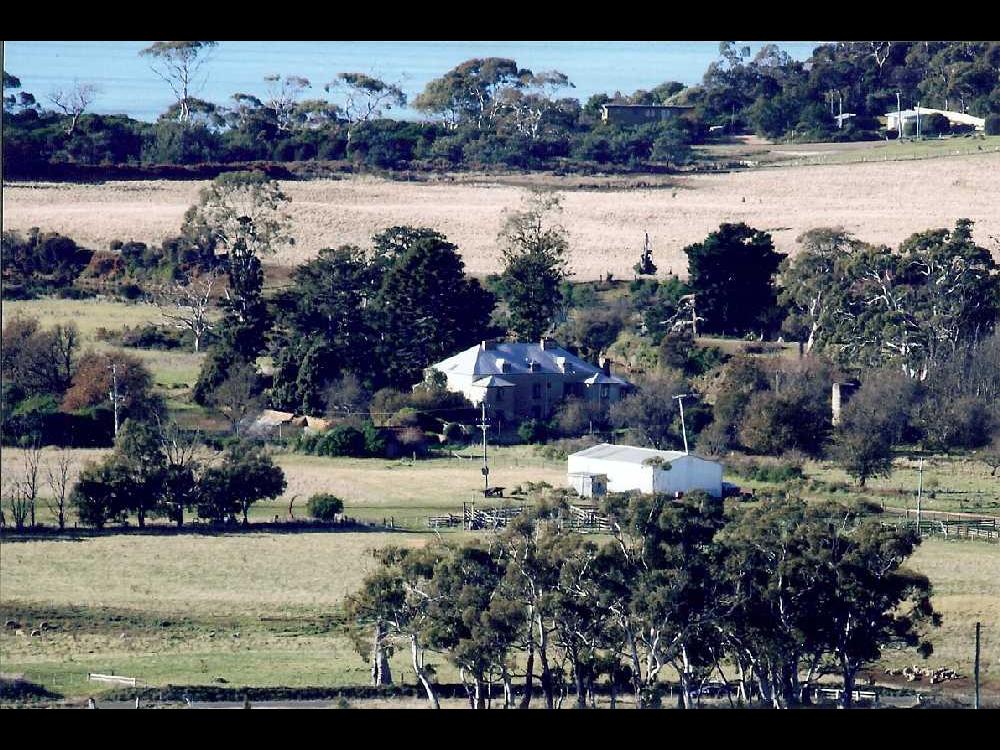
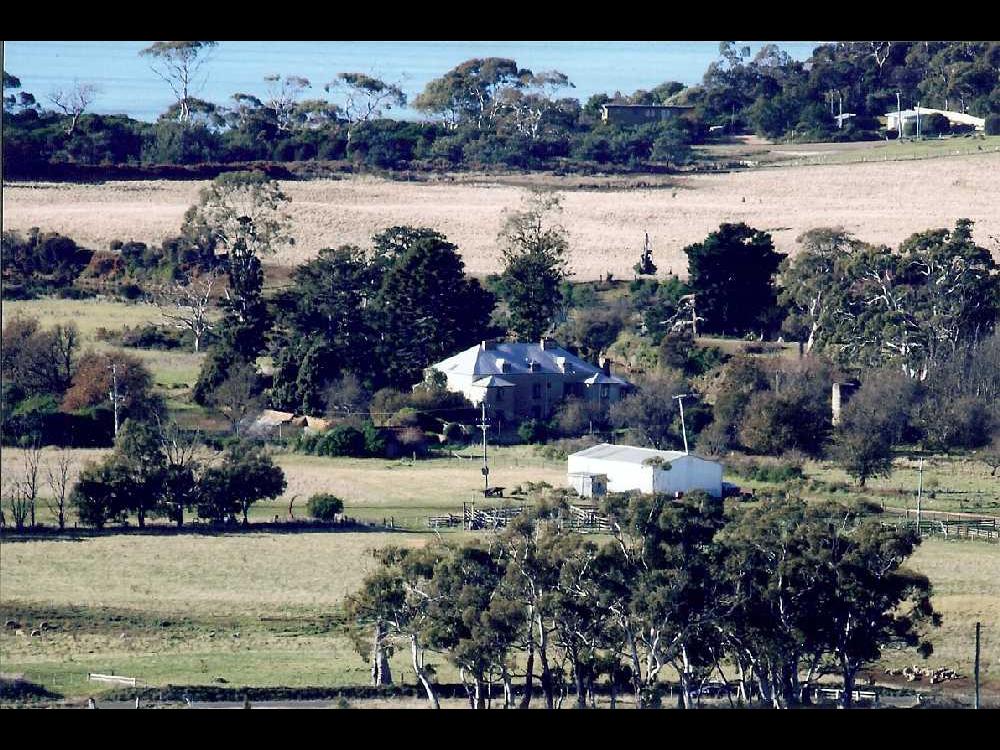
• Evan Preece: "Cambria" Swanport, Tasmania, Australia.
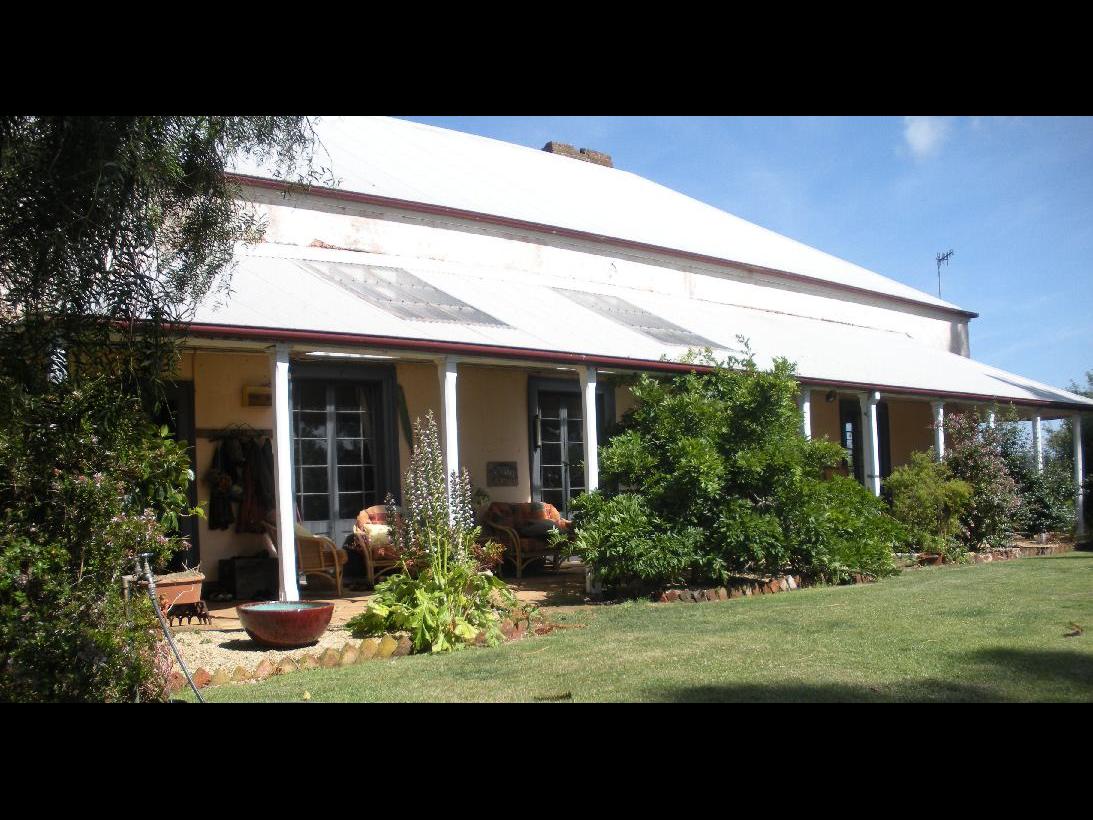
• Evan Preece: Farmhouse Cambria, Swanport, Tasmania.
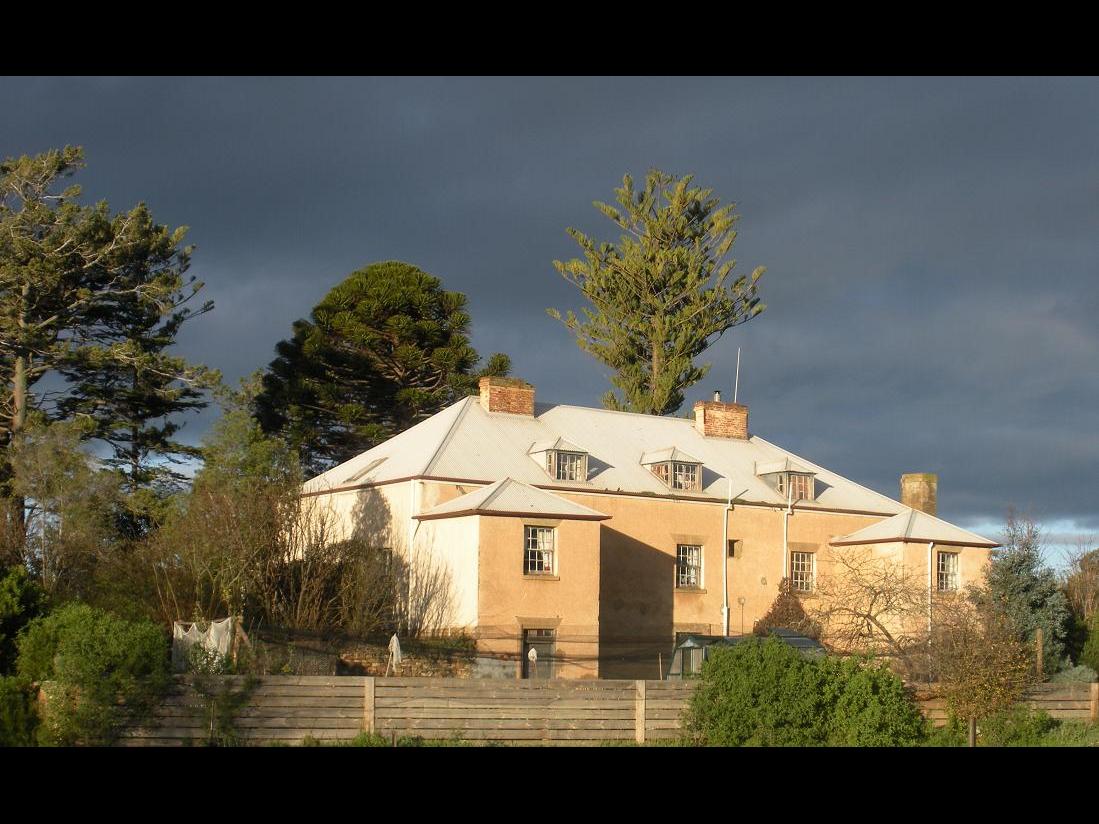
• Evan Preece: Farmhouse Cambria, Swanport, Tasmania.
Evan married Margaret CALAGHAN [18522] [MRIN: 6810] on 26 Jun 1837 in Parish Church of Sorell, St Georges, Tasmania. (Margaret CALAGHAN [18522] was born in 1810 in Antrim, Ireland, died on 20 Oct 1877 in Mt Gambier, South Australia and was buried in Mt Gambier, South Australia.)
|